
Students find this chapter hard for a reason that has nothing to do with intelligence. Neural control is taught as a flood of terms — nodes, potentials, neurotransmitters, tracts — with no obvious spine holding them together. Learn the terms in isolation and they slide out of your head within a week.
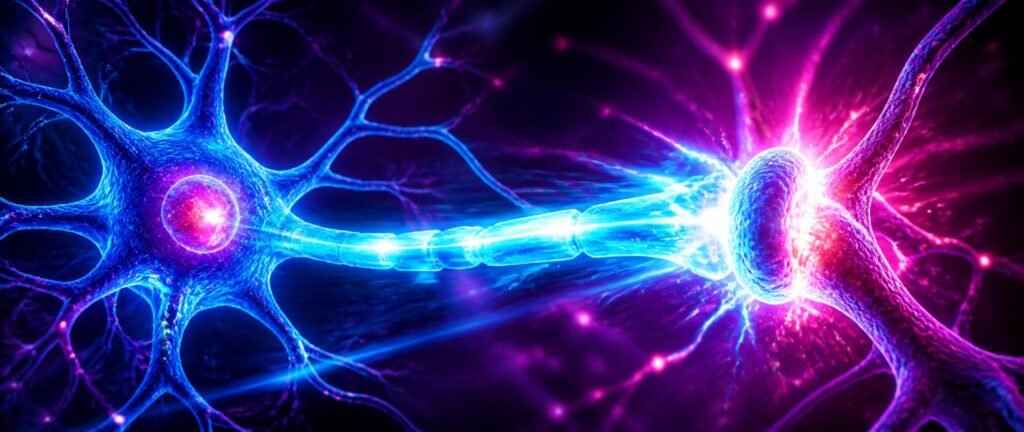
The fix is to learn the sequence, not the vocabulary. Neural control for NEET 2027 is really one process — a signal being generated, travelling, and crossing a gap — described in detail. Once that spine is clear, the terms hang off it and stay put.
Set this against the human physiology unit it belongs to, and subject-wise chapter weightage when planning your hours.
Table of Contents
Neural Control for NEET 2027: What Gets Tested
| Topic | Typical Questions | Nature |
|---|---|---|
| Neuron structure and types | 0–1 | Anatomy, recall |
| Resting and action potential | 1–2 | Sequence, ion movement |
| Synaptic transmission | 1 | Process, neurotransmitters |
| Central and peripheral nervous system | 0–1 | Divisions, functions |
| Reflex action and brain parts | 1 | Function mapping |
Neural control for NEET 2027 usually brings 2–3 questions, and it pairs closely with chemical coordination — the two are often examined together as the body’s control systems. It’s a meaningful slice of the largest unit in Biology.
The Neuron Membrane Potential: Learn This Cold
This is where most marks are won and lost, and where sequence matters most. Treat nerve impulse conduction NEET questions as a fixed story with fixed numbers, and memorise the NCERT diagrams that go with them.
Resting potential. The membrane sits at about −70 mV. The sodium-potassium pump moves 3 Na⁺ out for every 2 K⁺ in, and the membrane is more permeable to potassium at rest. Outside is positive, inside negative — this is polarised.
Depolarisation. An action potential NEET question usually pivots here: a stimulus opens sodium channels. Na⁺ rushes in, the inside becomes positive, and the potential shoots toward +30 mV. The membrane is now depolarised.
Repolarisation. Sodium channels close, potassium channels open, K⁺ flows out, and the membrane returns toward its resting negative value.
Learn those three action potential NEET stages with their directions and approximate values. Almost every action-potential question tests one specific step, and students lose marks by blurring which ion moves when.
Build these into effective condensed notes as you go. Two more points that get asked directly: conduction is faster in myelinated neurons because the impulse jumps between nodes of Ranvier — saltatory conduction — and the all-or-none principle means a stimulus either triggers a full action potential or none at all.
Synaptic Transmission
The signal has travelled down the neuron. Now it must cross a gap, and synaptic transmission NEET questions live entirely in how it does.
Two synapse types, and the distinction is asked constantly:
- Electrical synapse. Direct current flow, very fast, no neurotransmitter.
- Chemical synapse. The common type. Slower, and it uses neurotransmitters.
The chemical synapse sequence: the action potential reaches the axon terminal, calcium ions enter, synaptic vesicles release neurotransmitter into the cleft, the neurotransmitter binds receptors on the post-synaptic membrane, and a new potential is generated. Learn that chain in order — it’s a favourite for sequence-based questions.
Know acetylcholine as the classic neurotransmitter, and that the synapse ensures one-way transmission, since only the pre-synaptic terminal releases neurotransmitter. Park the sequence in spaced revision that sticks, and confirm the pattern with previous year papers.
The Nervous System’s Organisation
Here the challenge is mapping, not sequence. The nervous system for NEET 2027 organises into one clean tree:
- Central nervous system — brain and spinal cord.
- Peripheral nervous system — everything else, splitting into somatic and autonomic.
- Autonomic — splitting again into sympathetic (“fight or flight”) and parasympathetic (“rest and digest”).
The sympathetic-versus-parasympathetic contrast is high-yield. Sympathetic raises heart rate, dilates pupils, and inhibits digestion; parasympathetic does the reverse. A comparison table you build yourself will outperform any you download.
Brain Parts and Reflexes
For the brain, map function to region: the cerebrum for thought and voluntary action, the cerebellum for balance and coordination, the medulla for involuntary vital functions like heartbeat and breathing, and the hypothalamus for temperature, hunger and thirst. Questions almost always describe a function and ask for the region.
For reflexes, know the reflex arc pathway — receptor, sensory neuron, spinal cord, motor neuron, effector — and that a reflex bypasses the brain for speed, which is why you pull your hand from a hot surface before you consciously feel it.
Diagrams matter throughout this chapter — the neuron, the reflex arc and the brain all appear as labelled questions.
The Traps
- Resting potential sign. It’s negative inside, around −70 mV. Students drop the sign.
- Which ion moves when. Na⁺ in for depolarisation, K⁺ out for repolarisation — not the reverse.
- Sodium-potassium pump ratio. 3 Na⁺ out, 2 K⁺ in. The numbers get swapped.
- Sympathetic vs parasympathetic effects reversed. One speeds up, one slows down.
- Confusing cerebellum and cerebrum. Coordination versus conscious thought.
- Forgetting saltatory conduction applies to myelinated fibres only.
- Reflex bypasses the brain, not the spinal cord.
Almost all of these are sequence or mapping errors, which is why regular revision closes them permanently in a way one long read cannot.
How to Study It
- Learn the impulse story first — resting, depolarisation, repolarisation, with ions and values. Everything else is easier once this is secure.
- Draw three things from memory — a labelled neuron, the synapse sequence, and the nervous system tree.
- Build two comparison tables — sympathetic versus parasympathetic, and electrical versus chemical synapse.
- Then practise with past questions filtered to this chapter — the same steps recur narrowly.
Around a week for a thorough first pass, then short fortnightly revision of the diagrams and tables.
Final Word
Neural control for NEET 2027 stops being intimidating the moment you see it as one signal on a journey rather than a list of disconnected terms. Generate the impulse, send it down the axon, pass it across the synapse — everything in neural control for NEET 2027 attaches to that spine.
Learn the sequence properly, keep the diagrams warm, and this shifts from a chapter students fear to one of the more reliable scorers in human physiology.
❓ FAQ Section
Q: How many questions come from neural control in NEET? A: Typically 2–3 from this chapter, often examined alongside chemical coordination as the body’s control systems. Together they form a meaningful part of the human physiology unit, the largest in Biology.
Q: What is the resting membrane potential value? A: About −70 mV, with the inside of the neuron negative relative to the outside. The sodium-potassium pump and higher potassium permeability maintain this polarised state. Students frequently drop the negative sign.
Q: Which ions move during an action potential? A: Sodium ions rush in during depolarisation, driving the potential toward +30 mV, then potassium ions flow out during repolarisation, returning the membrane toward rest. Reversing these is a common error.
Q: What’s the difference between electrical and chemical synapses? A: Electrical synapses pass current directly and are very fast with no neurotransmitter. Chemical synapses are slower and use neurotransmitters released across a cleft. The chemical type is far more common and more heavily tested.
Q: What is saltatory conduction? A: The jumping of a nerve impulse between nodes of Ranvier in myelinated neurons, which makes conduction much faster. It applies only to myelinated fibres, a point NEET tests directly.
Q: Does a reflex action involve the brain? A: No. A reflex arc runs through the spinal cord, bypassing the brain for speed. This is why you withdraw from a painful stimulus before consciously registering the pain.