
Morphology of Flowering Plants has a lot of terms, and that scares many students. The good news is that NEET asks about the same terms and the same examples again and again. This morphology of flowering plants NEET PYQ analysis shows exactly which ones, with tables you can revise in minutes.
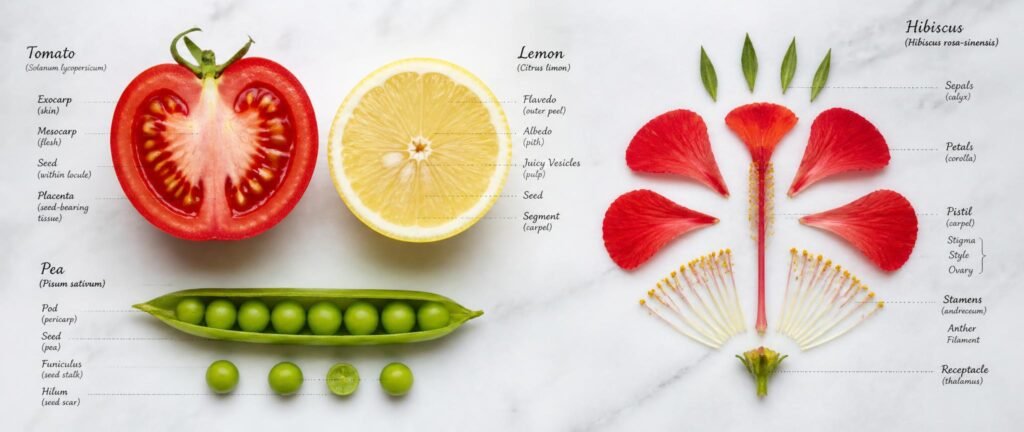
For the full Botany plan, see our complete NEET Botany guide. This chapter is where diagrams and examples matter most.
Want to test yourself first? Solve the Morphology of Flowering Plants PYQs for free, then use this guide to fix the gaps.
Table of Contents
Why This Chapter Is High-Yield
NEET usually asks two to three questions from Morphology of Flowering Plants. Most are “match the term with the example” questions taken straight from NCERT. To see how Botany chapters compare, check the NEET 2027 chapter weightage.
Diagrams also matter here, especially floral diagrams and types of placentation. Our guide to memorising NCERT Biology diagrams is a useful companion.
Morphology of Flowering Plants NEET PYQ: The Repeated Question Types
When you sort a decade of NEET biology PYQs from this chapter, five question types cover most of it.
| Question type | Frequency | What it tests |
|---|---|---|
| Placentation | Most frequent | Matching placentation to plant examples |
| Aestivation | Very frequent | Valvate, twisted, imbricate, vexillary |
| Modified roots and stems | Very frequent | Matching modification to example |
| Position of ovary | Regular | Hypogynous, perigynous, epigynous |
| Families and floral formula | Regular | NMC-listed families plus the NCERT families |
Almost every question here is a matching question. For more practice with visual formats, see our guide to diagram-based Biology questions.
Placentation Types and Examples
| Placentation | Examples |
|---|---|
| Marginal | Pea |
| Axile | China rose, tomato, lemon |
| Parietal | Mustard, Argemone |
| Free central | Dianthus, Primrose |
| Basal | Sunflower, marigold |
Aestivation Types and Examples
| Aestivation | Examples |
|---|---|
| Valvate | Calotropis |
| Twisted | China rose, lady’s finger, cotton |
| Imbricate | Cassia, gulmohur |
| Vexillary | Pea, bean |
Vexillary aestivation is also called papilionaceous. It has one large standard petal, two wing petals and a keel of two fused petals. Our list of overlooked NCERT Botany lines covers more details like this.
Root and Stem Modifications
These examples appear again and again:
- Prop roots: banyan
- Stilt roots: maize, sugarcane
- Pneumatophores: Rhizophora (mangroves)
- Stem tendrils: cucumber, pumpkin, grapevine
- Stem thorns: Citrus, Bougainvillea
- Underground stems: potato (tuber), ginger (rhizome), Colocasia (corm)
- Phylloclade (flattened stem): Opuntia
- Offset: Pistia, Eichhornia
Remember that sweet potato is a modified adventitious root, while potato is a modified stem. This pair is one of the most common traps.
Position of Ovary and Floral Formula
- Hypogynous (superior ovary): mustard, china rose, brinjal
- Perigynous (half-inferior ovary): plum, rose, peach
- Epigynous (inferior ovary): guava, cucumber, ray florets of sunflower
In a floral formula, ⊕ means actinomorphic, % means zygomorphic, and a line above G means an inferior ovary. Knowing these symbols is essential for family questions. The NMC syllabus names Malvaceae, Cruciferae, Leguminosae, Compositae and Gramineae, while NCERT describes Fabaceae (Leguminosae), Solanaceae and Liliaceae, so learn the floral formula and examples for each.
Worked PYQ-Pattern Questions
Q1. Axile placentation is found in: (a) Pea (b) Mustard (c) Tomato (d) Sunflower
Answer: (c) Tomato. Pea is marginal, mustard is parietal and sunflower is basal.
Q2. Vexillary aestivation is characteristic of:
Answer: Pea and bean, from the family Fabaceae.
Q3. Which of these is a perigynous flower? (a) Guava (b) Rose (c) Mustard (d) Cucumber
Answer: (b) Rose. Guava and cucumber are epigynous, and mustard is hypogynous.
Q4. Pneumatophores are found in:
Answer: Rhizophora. These roots grow upward to get oxygen in swampy mangrove soil.
Common Traps in This Chapter
- Calling potato a root and sweet potato a stem (it is the reverse)
- Mixing up axile and parietal placentation
- Assigning twisted aestivation to pea
- Confusing prop roots (banyan) with stilt roots (maize)
- Misreading the inferior-ovary line in a floral formula
Practise Every Morphology PYQ
This morphology of flowering plants NEET PYQ analysis gives you the tables. Practice makes them automatic. Every previous year question from this chapter is available chapter-wise, free:
👉 Solve all Morphology of Flowering Plants NEET PYQs
For every matching question you get wrong, add the example to your tables and revise them before the next set.
Conclusion
This chapter looks heavy but tests a small set of repeated terms. Use this morphology of flowering plants NEET PYQ analysis to master placentation, aestivation, modifications and ovary position. Then practise until each example instantly brings up its term.
❓ FAQ
Q: How many questions come from Morphology of Flowering Plants in NEET? A: Usually two to three questions, mostly matching-type questions based on NCERT examples.
Q: What is the most important topic in this chapter for NEET? A: Placentation and aestivation are the most tested, followed by modified roots and stems.
Q: Is potato a root or a stem? A: Potato is a modified underground stem called a tuber. Sweet potato is a modified adventitious root.
Q: How do I remember all the examples? A: Use the morphology of flowering plants NEET PYQ tables in this article, revise them daily for a week, and test yourself with past questions.
Q: Where can I practise Morphology of Flowering Plants PYQs for free? A: You can solve every previous year question from this chapter for free using the practice link in this article.