
Most students treat organic chemistry mechanisms like a vocabulary list — memorize the arrow, memorize the product, move on. Then exam day arrives, the question changes one substituent, and the entire memorized sequence falls apart.

That’s because mechanisms were never meant to be memorized as static facts. They’re processes — electron movement, bond breaking, bond forming — and processes are remembered visually, not verbally. Building a genuine visual memory method for organic chemistry reaction mechanisms for NEET 2027 is what separates students who can solve a familiar reaction from students who can solve any reaction NTA throws at them, including ones they’ve never seen exactly that way before.
This article breaks down why visual memory works better for mechanisms than rote recall, which reaction types deserve the most attention, and exactly how to build diagram-based fluency before the exam arrives.
Table of Contents
Why Mechanisms Resist Rote Memorization
Organic chemistry has more named reactions and mechanisms than any other NEET chapter cluster, and that volume is exactly why memorization-only approaches collapse under exam pressure.
- A mechanism has multiple steps, each depending on the one before it — skip understanding one step and the whole chain breaks
- NTA frequently changes the substrate or substituent in a question, which means a memorized product is useless if you don’t understand why that product formed
- Arrow-pushing (showing electron movement) is itself often tested directly, not just the final product
- Many mechanisms look similar on the surface (SN1 vs SN2, E1 vs E2) and only differ in subtle electron-flow logic
If you’re already deep into inorganic chemistry for NEET 2027 memorization, it’s worth recognizing that organic chemistry needs the opposite approach entirely — pattern recognition through visualization, not pure recall.
The Reaction Mechanisms That Matter Most for NEET 2027
Not every named reaction carries equal weightage. These mechanism categories show up most consistently across recent papers:
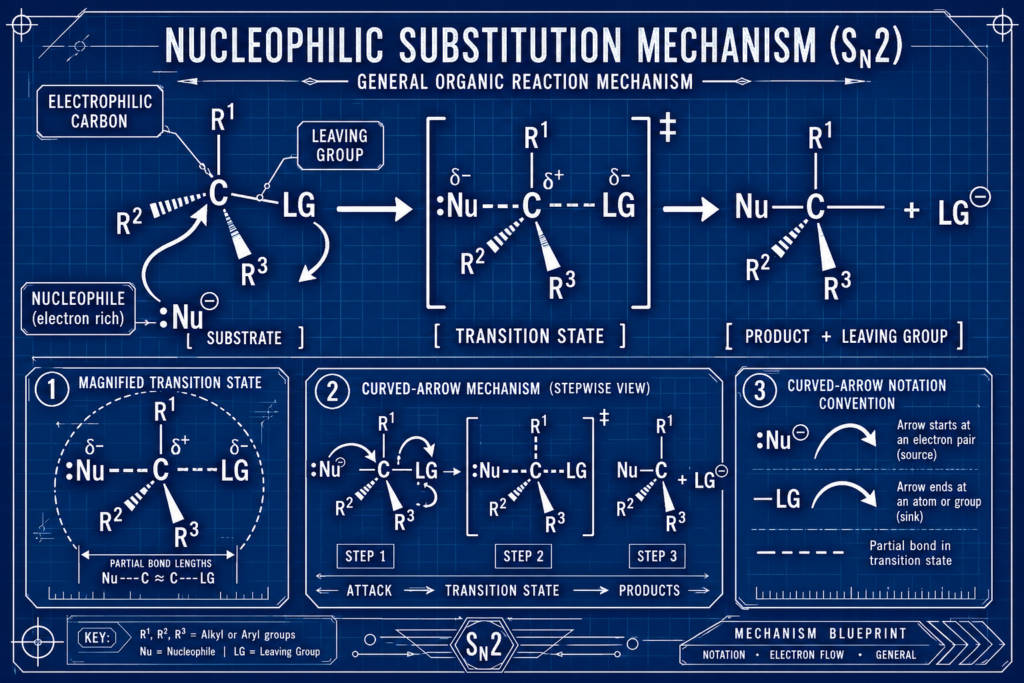
- Nucleophilic substitution (SN1 and SN2) — tested through both mechanism diagrams and rate-determining step questions
- Elimination reactions (E1 and E2) — frequently paired with substitution questions to test whether you can distinguish competing pathways
- Electrophilic addition — central to alkene and alkyne chemistry, heavily diagram-based
- Electrophilic aromatic substitution — benzene ring reactions with directing-group logic
- Nucleophilic addition — carbonyl chemistry, especially aldehydes and ketones
- Free radical mechanisms — less frequent but high-value when tested, since few students prepare them visually
Building genuine fluency in organic chemistry reaction mechanisms for NEET 2027 means treating each of these six categories as its own visual pattern rather than a list of steps to memorize in isolation. This level of fluency is exactly what strong NEET 2027 organic chemistry preparation is built on.
The Visual Memory Method, Step by Step
Visual memory for mechanisms works because you’re encoding the logic of electron movement, not just the sequence of words describing it. Here’s how to actually build it.
- Draw the mechanism from scratch, not from a textbook copy. Start with the substrate, then draw each arrow yourself before checking the answer.
- Color-code electron movement. Use one color for the nucleophile’s attack, another for the leaving group’s departure. This single habit makes reaction mechanisms NEET 2027 questions far easier to retain.
- Narrate while you draw. Say out loud what’s happening at each arrow — “the lone pair attacks the carbon, the leaving group departs” — connecting the visual to the logic.
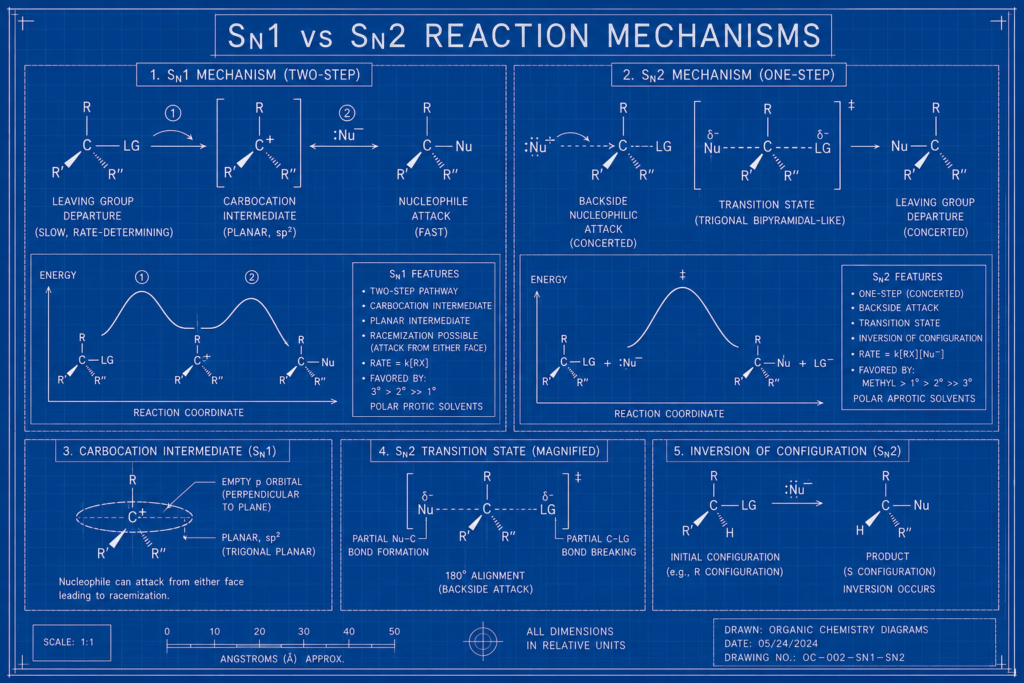
- Compare similar mechanisms side by side. Draw an SN1 SN2 mechanism comparison on the same page and circle exactly where they diverge. This catches the subtle differences that text-only revision misses.
- Test yourself with altered substrates. Take a mechanism you’ve mastered and swap in a different leaving group or nucleophile, then predict the outcome before checking.
This approach pairs naturally with the active recall and spaced revision method, since redrawing a mechanism from memory at increasing intervals is what moves it from short-term recognition into long-term retention.
Building a Mechanism Notebook
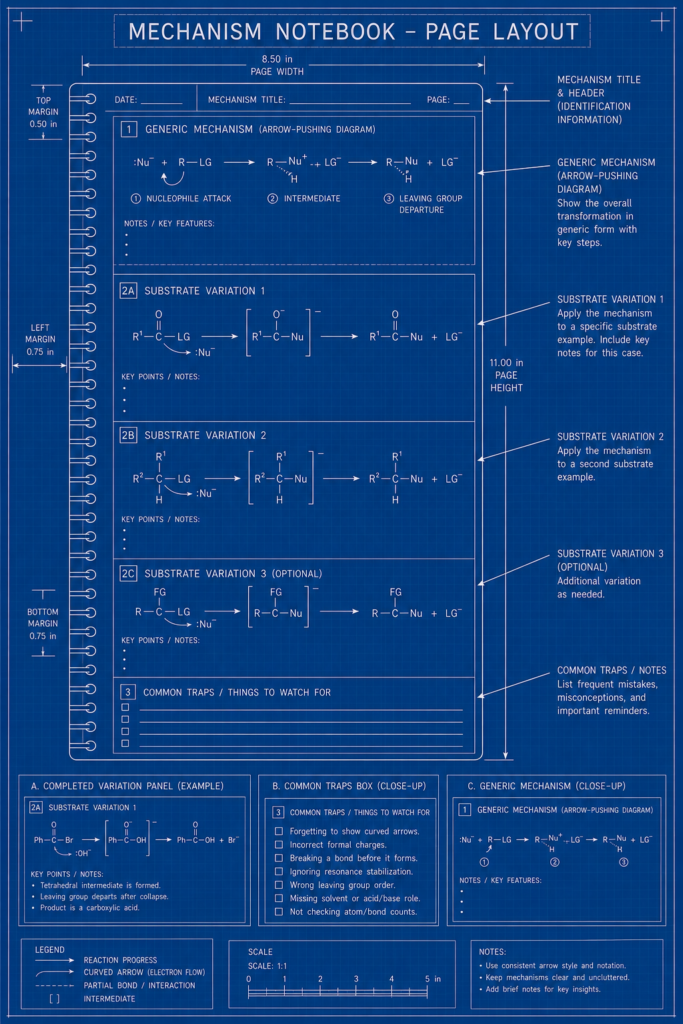
A dedicated mechanism notebook, separate from your regular organic chemistry notes, becomes one of the highest-value revision tools in the final months before the exam.
- Dedicate one page per mechanism type, with the generic mechanism drawn at the top
- Below it, work through two or three substrate variations of the same mechanism
- Add a small “common traps” box noting where students typically mislabel a step or confuse a similar-looking mechanism, such as any SN1 SN2 mechanism pair that looks identical at first glance
If you haven’t yet built a consistent notebook system, our guide on how to make effective notes covers how to structure visual content like this without your notes becoming cluttered or disorganized.
How This Connects to Physical Chemistry Numericals
Mechanism understanding doesn’t stay isolated to organic chemistry — reaction rates, intermediate stability, and activation energy concepts overlap directly with physical chemistry. Students who visualize organic chemistry reaction mechanisms for NEET 2027 well tend to also grasp reaction kinetics faster, since both subjects reward the same underlying skill: tracking how and why a system changes step by step. Our breakdown of physical chemistry numericals is a useful next stop once mechanisms start to click.
Common Mistakes Students Make With Mechanisms
- Memorizing the final product without the steps — this collapses the moment NTA changes the substrate slightly
- Treating arrow-pushing as decorative — examiners increasingly test the arrows themselves, not just the outcome
- Confusing similar mechanisms — SN1/SN2 and E1/E2 are the most commonly mixed up, almost always because students never drew them side by side
- Skipping mechanism questions in PYQs — if you’re working through previous year papers and jumping past mechanism-heavy questions because they take longer, you’re avoiding exactly the practice that builds real fluency
This pattern of avoidance mirrors what we’ve seen with biology diagram-based questions — students consistently skip the visual-heavy questions that feel harder, when those are usually the ones worth the most practice time.
Bringing It All Together for NEET 2027
The students who score highest in organic chemistry aren’t the ones who’ve memorized the most reactions — they’re the ones who understand the underlying electron-movement logic well enough to handle a reaction they’ve never seen exactly that way before. That’s the entire point of an organic chemistry visual method for organic chemistry reaction mechanisms for NEET 2027: building flexible understanding instead of brittle recall.
Start with one mechanism category this week — pick whichever one currently confuses you most — and draw it from scratch until you can explain every arrow out loud without checking your notes. That single habit, repeated across all six major reaction mechanisms NEET 2027 categories over the coming months, will do more for your organic chemistry reaction mechanisms for NEET 2027 score than another round of passive reading ever could.
FAQs
Q: Why is visual memory better than rote memorization for organic chemistry mechanisms? A: Mechanisms represent processes — electron movement and bond changes — that are inherently sequential and spatial. Visualizing them builds an understanding of why a reaction proceeds the way it does, which holds up even when NTA changes the substrate, unlike memorized facts that collapse the moment a question deviates slightly from what was memorized.
Q: Which organic chemistry mechanisms are most important for NEET 2027? A: Nucleophilic substitution (SN1, SN2), elimination reactions (E1, E2), electrophilic addition, electrophilic aromatic substitution, nucleophilic addition in carbonyl chemistry, and free radical mechanisms consistently carry the highest weightage and are worth prioritizing.
Q: How do I stop confusing SN1 and SN2 mechanisms? A: Draw both mechanisms side by side on the same page and circle exactly where the electron-movement logic diverges — SN1’s two-step process with a carbocation intermediate versus SN2’s single concerted step. Comparing them visually, rather than reading about them separately, is what fixes the confusion.
Q: How much time should I spend on mechanism practice each week? A: Even 20 to 30 minutes a few times a week, focused on redrawing one mechanism from memory and testing it against an altered substrate, builds meaningful retention over a few months — consistency matters more than long single sessions.
Q: Are mechanism questions common in actual NEET papers? A: Yes, increasingly so. NTA has shifted toward testing arrow-pushing and step-by-step understanding directly, rather than only asking for final products, which means mechanism fluency has become a bigger scoring factor than it was in earlier years.
Q: Should I make a separate notebook just for mechanisms? A: It’s one of the highest-value habits you can build. A dedicated mechanism notebook with one page per reaction type, including common traps and substrate variations, becomes an extremely efficient revision tool in the final months before the exam.
[…] and carboxylic acids without re-learning it each time. This is also exactly the mindset behind a visual approach to mechanisms — seeing the pattern once, then recognising it everywhere across every organic chemistry reaction […]
[…] how mechanisms build on these ideas, see our organic mechanisms guide. This article focuses on what past papers actually […]