
Picture this: you walk into your exam centre expecting the usual OMR sheet and pencil, and instead you’re handed a login ID for a computer screen. That’s the reality NEET aspirants are staring down for 2027, and it’s a bigger shift than most students realise.
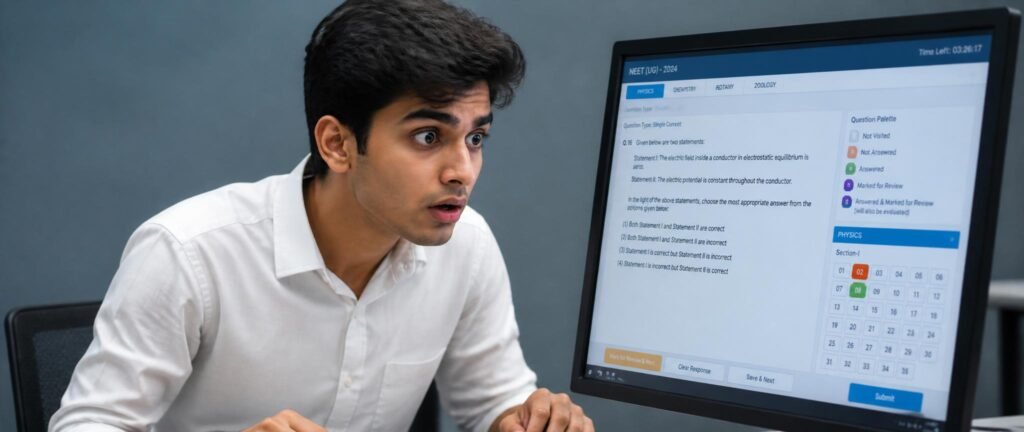
The NEET UG 2027 CBT exam is expected to move away from the single-day, pen-and-paper format that every batch before you has known. Based on recent reports, the exam will now be conducted as a Computer-Based Test spread across 5–6 days, run at nearly 1,000 centres in around 500 cities nationwide. If you’re prepping for 2027, this isn’t a minor logistics footnote — it changes how you should think about your transition from OMR to CBT, your travel planning, and even your revision timeline.
Let’s break down exactly what’s changing, why it’s happening, and what you need to do about it.
Table of Contents
What’s Actually Changing in the NEET UG 2027 CBT Exam
For over a decade, NEET has been a single-day, pen-and-paper exam attempted by more than 22 lakh students at once. That scale is precisely what made the exam vulnerable — printing, transporting, and storing lakhs of question papers across the country created repeated opportunities for leaks, including the controversy that forced a re-exam in 2026.
The proposed fix is straightforward on paper but massive in execution: instead of everyone writing the same paper on the same morning, the NEET UG 2027 CBT exam will run over multiple days and shifts, with each centre handling around 500 candidates per day. Multiply that across nearly 1,000 centres, and NTA can process roughly 5 lakh candidates daily — clearing the entire exam cycle within a week instead of a single high-risk day.
This isn’t NTA inventing something new from scratch. Digital, multi-day, multi-shift testing is already the norm for JEE Main, CUET, and GATE. NEET is simply catching up to a model that’s been tested at scale elsewhere — and once the NEET 2027 CBT mode becomes official, expect coaching institutes and students alike to treat CBT familiarity as a core prep skill, not an afterthought.
NEET UG 2027 Exam Schedule: How the 5–6 Day Format Works
Here’s what the proposed NEET UG 2027 exam schedule looks like based on current reports:
- The exam runs across 5 to 6 days, not a single sitting
- Roughly 500 candidates per centre per day
- Nearly 1,000 NEET 2027 exam centres spread across about 500 cities
- An estimated 5 lakh students appearing daily during the exam window
Because you’ll be tested on a different day and possibly a different shift than another student, NTA is expected to apply a percentile-based normalisation formula — similar to what’s used for JEE Main — to make sure no one is unfairly advantaged or disadvantaged by which day or slot they get. Your raw score won’t be compared directly against someone from another shift; your percentile will. This makes solid exam time management even more important, since your pacing now has to hold up under a completely new NEET UG 2027 exam schedule.
If you’ve been tracking the official 2027 exam schedule already, treat this CBT update as the missing piece — it tells you how the exam will be delivered, while the exam date update tells you when. It’s also worth checking the NEET 2027 registration date so your application and address proof are sorted well before city allotment begins.
Test Centres and City Allotment: What Fewer Centres Means for You
This is the part of the NEET UG 2027 CBT exam plan that deserves real attention: nearly 1,000 NEET 2027 exam centres sounds like a lot until you remember it’s replacing the tens of thousands of temporary exam halls used for the old paper-based format. Most of the proposed centres are expected to be government institutions — Kendriya Vidyalayas and Navodaya Vidyalayas — along with the tighter security checks already being tested at recent NEET centres, and a limited number of reputed private institutions possibly added to the list.
Fewer centres, spread across roughly 500 cities, means:
- Longer travel distances for some students — especially those in smaller towns without a nearby government school large enough to host CBT infrastructure
- NEET 2027 city allotment based on your ID address proof, so make sure your documents reflect your current, verifiable address well before applications open
- Higher demand for early city preference selection, since seats at popular centres will fill faster under the new NEET 2027 CBT mode
- More predictable, standardised conditions once you’re inside — the same screen layout, timer, and interface at every centre, regardless of city
How to Prepare for the NEET UG 2027 CBT Exam Format
The syllabus isn’t changing. Physics, Chemistry, Botany, and Zoology stay exactly as demanding as before. What changes with the NEET UG 2027 CBT exam is the interface you’ll use to answer them, and that’s a skill in itself.
Start practising on a screen, not just on paper. Reading comprehension and calculation speed both shift slightly when you’re navigating a question palette instead of flipping pages. The earlier you get comfortable with “Save & Next,” “Mark for Review,” and on-screen subject switching, the less mental bandwidth you’ll burn on exam day figuring out the interface instead of the questions.
Take your mock tests seriously as CBT simulations, not just content checks. Layer in screen-based mocks specifically, ideally under timed, shift-like conditions, so navigating the palette feels routine long before the actual exam day.
Track your city and centre eligibility early. Since the exact number of centres in your preferred city will be limited, don’t wait for the last date to check your options. Once NTA’s detailed notification drops with confirmed shifts, cities, and centre lists, cross-check it immediately against your address proof.
Stay calm about the multi-day format. A longer exam window with normalisation might feel unfamiliar, but it’s designed to reduce security risk, not disadvantage students who get a later slot. The content tested, the marking scheme, and the difficulty calibration under the new format are all built to stay fair across days.
The Bottom Line
The NEET UG 2027 CBT exam represents the biggest structural change to India’s medical entrance test in years — new mode, new schedule, new centre logistics, and a fresh approach to NEET 2027 city allotment. None of it changes what you need to know; it changes how you’ll be tested on it. Get comfortable with the screen, plan your city preference early, and keep your NCERT fundamentals rock solid. The students who adapt to the format now, months before the official bulletin drops, will walk in calm while everyone else is still figuring out where the “Clear Response” button is.
FAQs
Q: What is the NEET UG 2027 CBT exam? A: It’s the proposed shift of NEET-UG from a pen-and-paper OMR format to a Computer-Based Test, where candidates answer on a screen instead of bubbling an answer sheet. The move is meant to strengthen exam security after repeated paper-leak controversies.
Q: How many days will the NEET UG 2027 CBT exam run for? A: Reports indicate the exam will be conducted over 5–6 days, with each of the nearly 1,000 centres handling around 500 candidates daily.
Q: Will the NEET 2027 syllabus change because of the CBT format? A: No. The syllabus, subject-wise weightage, and marking scheme (+4 for correct, −1 for incorrect) are expected to remain the same. Only the exam delivery mode is changing.
Q: How will scores be compared if students appear on different days or shifts? A: NTA is expected to use a percentile-based normalisation formula, similar to JEE Main, so results are fair regardless of which day or shift a student is allotted.
Q: Will there be fewer NEET exam centres under the new format? A: Compared to the old system, yes — centres will be concentrated at around 1,000 locations, mostly government institutions like Kendriya Vidyalayas and Navodaya Vidyalayas, across roughly 500 cities.
Q: When will the official NEET UG 2027 CBT notification be released? A: A detailed bulletin covering shift timings, city lists, and the normalisation formula is expected once NTA’s restructuring process is complete. No official date has been confirmed yet.
[…] and screen-based exam handling. If you want the full official timeline as it’s released, NTA’s latest exam-mode announcements are being tracked […]