
NEET Biology used to reward students who could recite NCERT lines word for word. That’s changing fast, and most droppers preparing for 2027 haven’t noticed yet.

Look closely at the last two years of papers and a pattern emerges: examiners are pulling fewer direct fact-recall questions and pushing more questions that test whether you actually understand a diagram — labeling parts, identifying stages, spotting what’s wrong in a modified figure, or comparing two structures side by side. This is one of the clearest biology diagram-based questions NEET 2027 trends shaping how toppers are revising right now.
If your current Biology revision is built entirely around reading and rereading NCERT text, you’re preparing for an exam that no longer fully exists. Here’s what’s actually changed, and how to fix your strategy before it costs you marks.
Table of Contents
Why NEET Is Shifting Toward Diagram-Based Questions
NTA has been quietly raising the bar on application-based testing across all three subjects. In Biology specifically, this shows up as:
- Labeled diagrams with one or two labels deliberately swapped or left blank
- “Identify the structure” questions using simplified or redrawn versions of NCERT figures
- Comparison-based questions asking you to match a diagram to the correct process stage
- Assertion-reason questions built around a diagram rather than a text statement
This isn’t a random shift. It rewards students who’ve actually built a mental picture of how a process works, not just memorized the paragraph describing it. For a deeper look at how this fits the wider exam pattern, our analysis of chapter-wise weightage trends breaks down exactly where these NEET Biology diagram questions cluster.
Where Diagram-Based Questions Show Up Most
Some chapters are far more diagram-heavy than others. If you’re short on time, prioritize these six first.
1. Human Reproduction
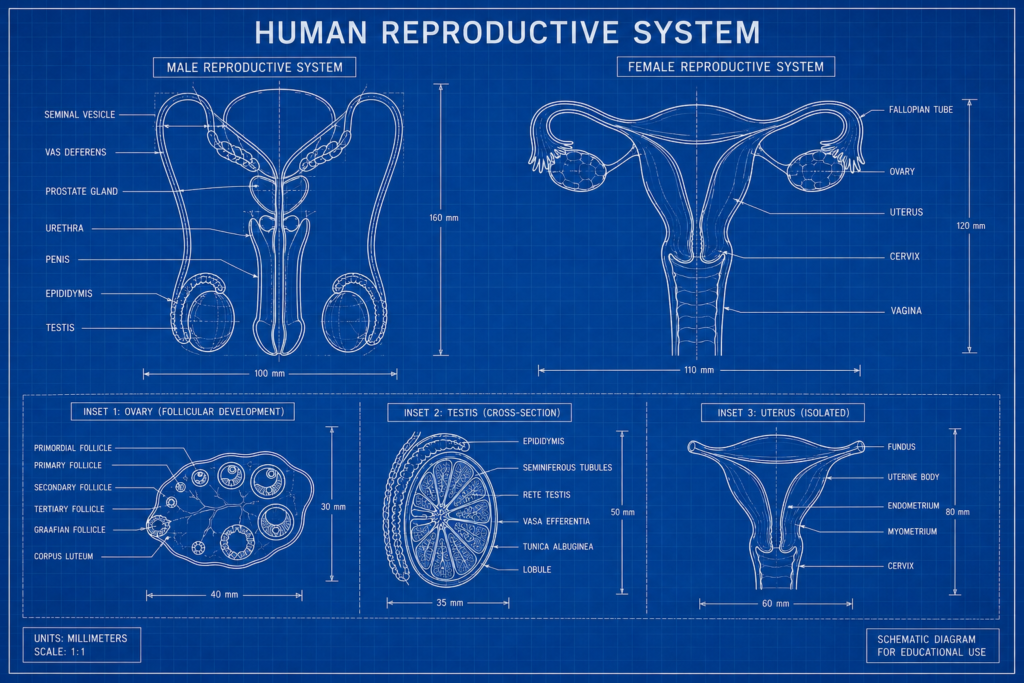
Labeled male and female reproductive system diagrams are a near-guaranteed feature in this chapter. Expect questions that ask you to identify a structure from an unlabeled figure, or match a part to its function — testis to spermatogenesis, fallopian tube to fertilization, and so on. Students who can only recall the names in order, without picturing where each structure sits relative to the others, tend to lose marks on these NEET Biology diagram questions.
2. Plant Anatomy
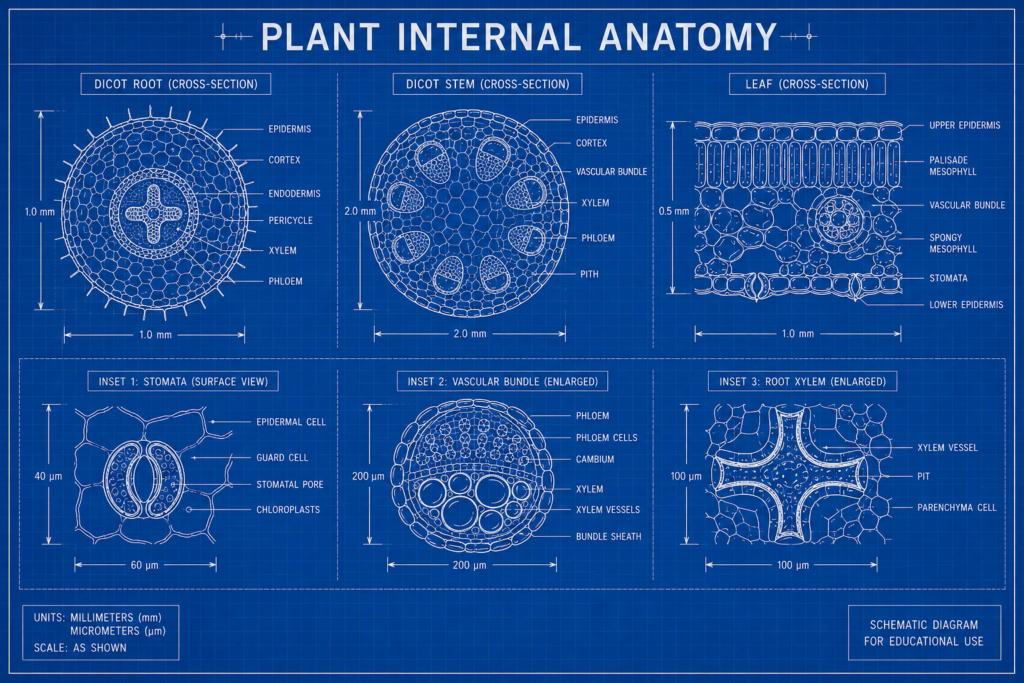
Cross-sections of the root, stem, and leaf show up repeatedly, and NEET often tests the differences between monocot and dicot versions of the same structure. The trick examiners use most is swapping a label between two visually similar tissues — xylem and phloem, or palisade and spongy mesophyll — so practicing identification through diagram-based NEET questions rather than just memorizing names matters more here than almost anywhere else in Biology.
3. Cell Cycle and Cell Division
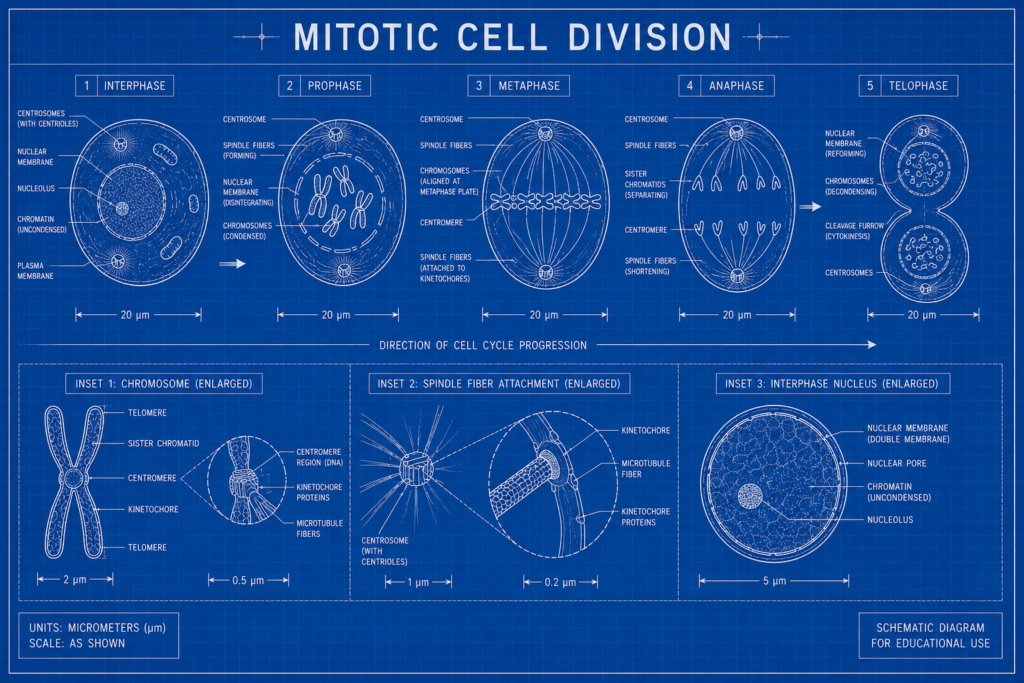
This is where stage-identification questions dominate: given a diagram of a single stage, can you name it correctly — prophase, metaphase, anaphase, telophase — based on chromosome arrangement and spindle position alone? NEET frequently presents these stages out of sequence and asks you to reorder them, which means rote memorization of the stage order isn’t enough; you need to recognize each stage visually. This is exactly the kind of biology diagram-based questions NEET 2027 pattern that catches students who revise text but skip the visuals.
4. Human Physiology (Nephron and Heart)
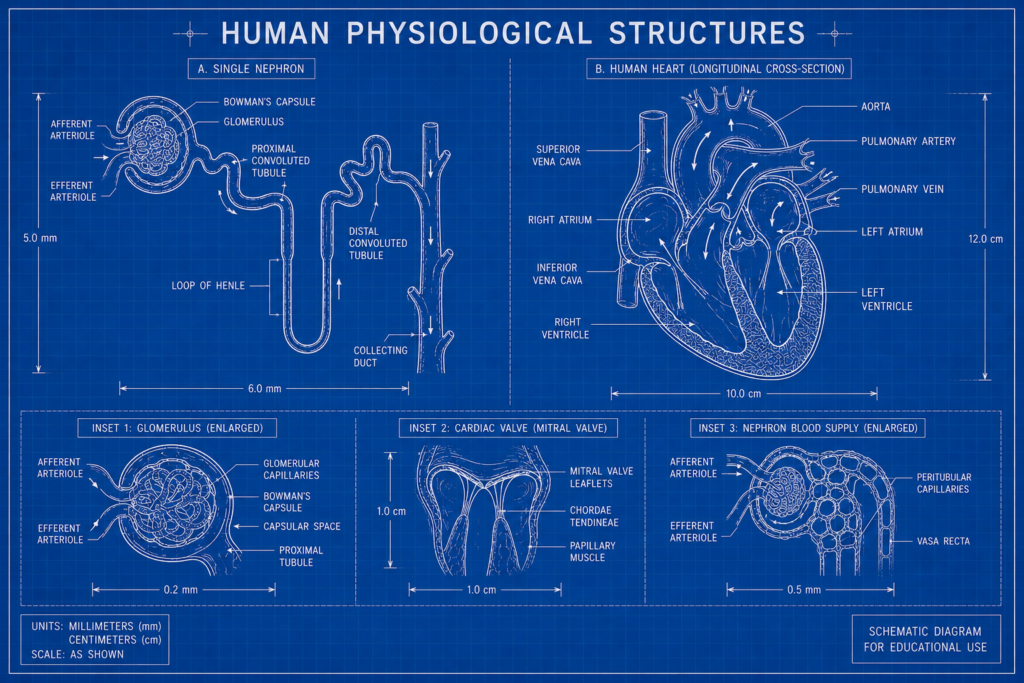
The nephron and the heart are two of the most diagram-tested structures in the entire syllabus, making them a priority for NEET 2027 Biology preparation. Expect labeling questions on the nephron’s filtration path (Bowman’s capsule through to the collecting duct) and on the heart’s chamber and vessel layout. These chapters consistently show up in our breakdown of the most repeated biology chapter in NEET history — and that repetition now increasingly comes wrapped in diagram form rather than direct text recall.
5. Photosynthesis
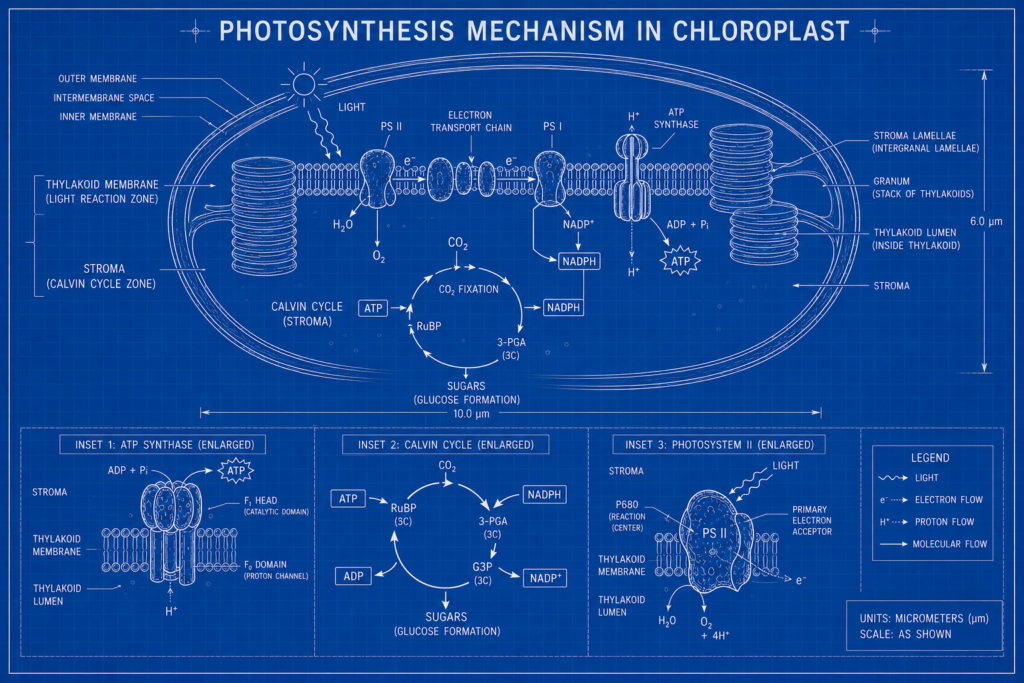
The light reaction and the Calvin cycle are usually tested through schematic diagrams showing electron flow, ATP and NADPH production, or the inputs and outputs of carbon fixation. Students often know the chemical steps but freeze when the same information is presented as a flow diagram instead of a paragraph — a gap that consistent NCERT diagram practice closes faster than rereading the chapter text ever will.
6. Genetics
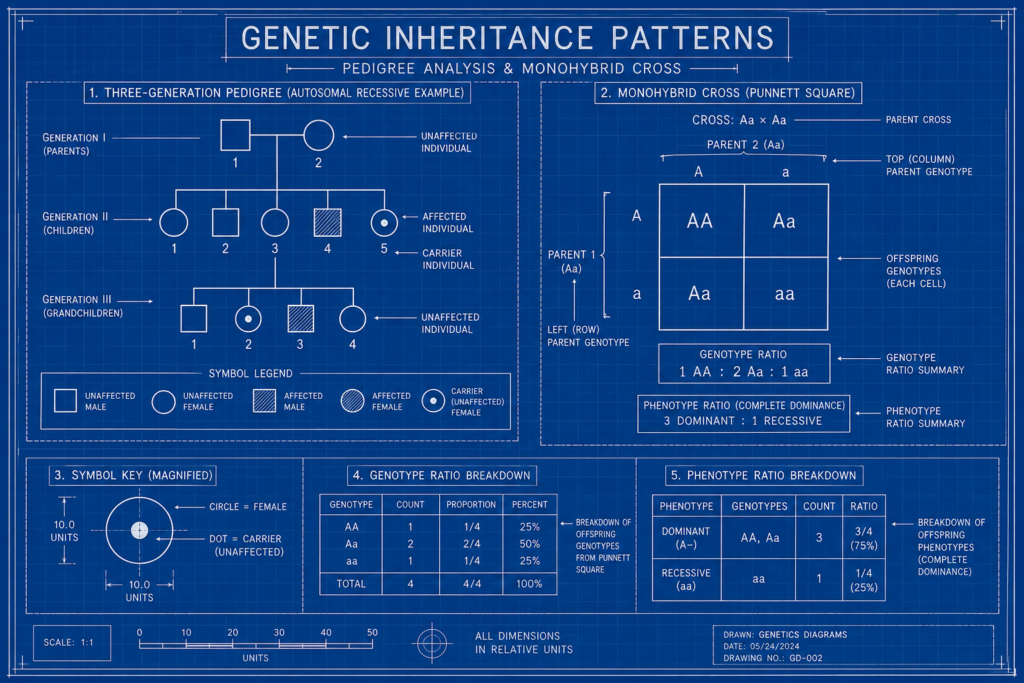
Pedigree charts and Punnett square diagrams require a different kind of diagram literacy: reading symbols rather than labeling anatomy. Expect questions that hand you a three-generation pedigree and ask you to determine the inheritance pattern, or a partially filled Punnett square you need to complete. These questions move fast in the exam if you’ve practiced symbol-reading beforehand, and slow you down badly if you haven’t — another reminder that biology diagram-based questions NEET 2027 prep needs to cover symbol literacy, not just anatomical labeling.
How to Actually Study Diagrams (Not Just Look at Them)
Passively staring at an NCERT diagram for the tenth time doesn’t build the recall you need under exam pressure. Try this instead:
- Redraw blind. Close the book and draw the diagram from memory. Compare. Fix gaps.
- Label without a key. Print or sketch the unlabeled version and label every part yourself.
- Teach it out loud. Explain what each labeled part does, not just its name — this catches half-understood concepts fast.
- Spot the error. Practice with deliberately mislabeled diagrams (many test series include these) and train yourself to catch the mismatch quickly.
- Connect diagram to process. A diagram of meiosis means nothing if you can’t explain why each stage looks the way it does.
This active approach pairs well with the active recall and spaced revision method, which works especially well for diagram-based NEET questions since spaced exposure helps visuals stick in long-term memory rather than short-term cramming.
Building Diagram Fluency Into Your Daily Routine
You don’t need a separate study block for this — diagram practice fits naturally into revision you’re already doing.
- During your daily Biology revision hour, spend the last 10 minutes redrawing one diagram from memory
- Keep a dedicated diagram notebook separate from your regular notes — this becomes gold during the final 30 days
- Whenever you make notes for a new chapter, sketch the key diagram alongside the text rather than after
If you’re still figuring out how to structure note-taking around this, our guide on how to make effective notes covers exactly how to integrate NCERT diagram practice without making your notes cluttered.
Common Mistakes Students Make With Diagram-Based Questions
- Memorizing labels without understanding function — you can label a nephron perfectly and still get the question wrong if you don’t know what each part does
- Ignoring diagrams in “easy” chapters — examiners deliberately test diagrams in chapters students assume are text-only
- Practicing only NCERT’s exact diagram orientation — NEET often redraws or flips diagrams, so practice recognizing structures from different angles
- Skipping diagram-based PYQs — if you’re solving previous year papers and skimming past the diagram questions because they feel harder, you’re avoiding exactly the practice you need most
This kind of avoidance is common in NEET 2027 Biology preparation, where students gravitate toward what feels comfortable instead of what actually moves their score. Building consistent NCERT diagram practice into your weekly routine, rather than treating it as an afterthought, is what separates students who panic on diagram-based questions from those who breeze through them.
How Diagram Practice Fits Into Your Bigger NEET 2027 Strategy
Biology diagrams don’t exist in isolation — they connect directly to chapter weightage, revision cycles, and how you allocate study hours across the syllabus. Treating biology diagram-based questions NEET 2027 prep as a standalone task, separate from your regular Biology study plan, is a mistake. The students seeing the biggest score jumps are the ones folding diagram work into chapters they’re already revising, not bolting it on as an extra task at the end of the day.
The Bottom Line for NEET 2027 Biology Prep
The shift toward biology diagram-based questions NEET 2027 isn’t going away — if anything, expect it to intensify as NTA continues pushing toward application-based testing across the board. The students who adapt now, while there’s still runway before the exam, will walk in confident instead of caught off guard.
Start small: pick one high-yield chapter from the table above, redraw its key diagrams from memory this week, and build from there. Three months of consistent diagram practice will do more for your biology diagram-based questions NEET 2027 readiness than another round of passive NCERT reading ever could.
FAQs
Q: Why is NEET shifting toward biology diagram-based questions for 2027? A: NTA has been steadily increasing application-based and conceptual questions across all subjects rather than relying purely on factual recall. Diagram-based questions test whether a student truly understands a process, not just whether they’ve memorized a textbook line, making them harder to guess and more reliable indicators of real preparation.
Q: Which NCERT Biology chapters have the most diagram-based questions? A: Human Reproduction, Plant Anatomy, Cell Division, Human Physiology (especially the nephron and heart), Photosynthesis, and Genetics consistently produce the highest number of diagram-based questions in recent NEET papers.
Q: How many hours should I dedicate to diagram practice daily? A: You don’t need a separate block — 10 to 15 minutes of redrawing or labeling diagrams from memory, layered into your existing daily Biology revision, is enough if done consistently over months.
Q: Are diagram-based questions harder than regular MCQs? A: Not inherently, but they catch students who relied on rote memorization without true understanding. Once you can redraw a diagram and explain each part’s function, these questions often become easier than text-based recall questions.
Q: Can I skip diagrams and still score well in NEET Biology? A: It’s risky. With NTA increasing diagram-based and application-based questions each year, skipping diagram practice means leaving a growing chunk of the paper unprepared for, especially in physiology and plant anatomy chapters.
Q: Where can I find practice diagrams similar to NEET’s style? A: NCERT textbooks remain the base, but quality test series and PYQ compilations often redraw or modify these diagrams to match NTA’s exam style more closely than the textbook originals.