
Quick answer: A cell the unit of life NEET PYQ analysis shows that NTA asks about two to three questions a year from this chapter, and most come from five areas: the structure and function of cell organelles (mitochondria, plastids, Golgi, ribosomes), the prokaryotic cell (mesosomes, inclusion bodies, 70S ribosomes), the endomembrane system, the fluid mosaic model of the plasma membrane, and centrioles, cilia and chromosome types. Nearly every question is a direct NCERT line.
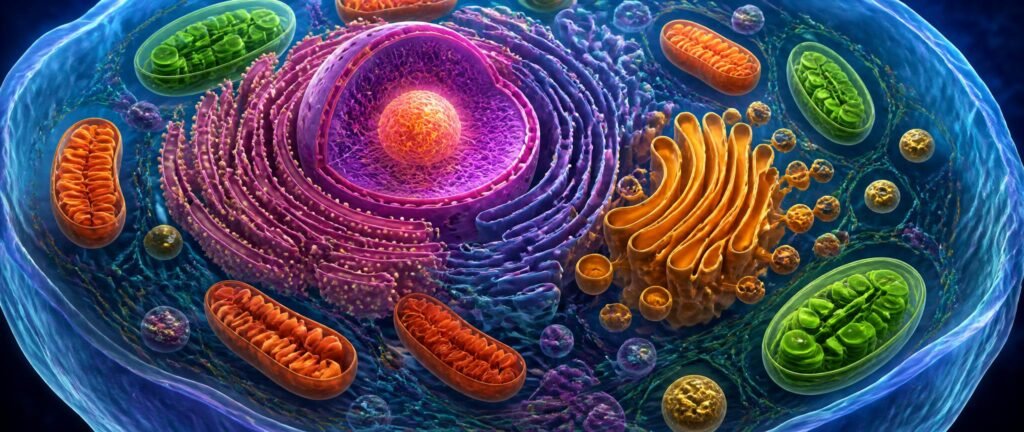
This guide breaks down what NTA repeats, the tables to memorise and PYQ-pattern questions with answers. For a full concept-first explanation, read our cell biology guide for NEET.
Want to test yourself first? Solve the Cell: The Unit of Life PYQs for free, then use this guide to fix the gaps.
Table of Contents
Why This Chapter Pays Off
With over a hundred past questions, Cell: The Unit of Life has one of the biggest PYQ banks in Class 11 Biology. Its questions keep testing the same organelle facts, which makes it a very reliable chapter once those facts are in tables. For chapter notes, use our Cell class 11 notes, and to see where it sits among other chapters, check the NEET 2027 chapter weightage.
The chapter leads straight into our Cell Cycle PYQ analysis, and many organelle questions are diagram-based, so our NCERT biology diagrams guide is worth a look too.
Cell the Unit of Life NEET PYQ Analysis: What NTA Repeats
When you sort the past NEET biology PYQs from this chapter, five question types cover nearly everything.
| Question type | Frequency | What it tests |
|---|---|---|
| Cell organelles | Most frequent | Mitochondria, plastids, Golgi, ER, lysosomes, ribosomes, vacuoles |
| Bacterial cell | Very frequent | Mesosomes, cell envelope, inclusion bodies, 70S ribosomes, plasmids |
| ER–Golgi–lysosome group | Very frequent | Which organelles are included and which are not |
| Plasma membrane and cell wall | Regular | Fluid mosaic model, composition, transport, middle lamella |
| Nucleus, chromosomes, centrioles and cilia | Regular | Nucleolus, centromere position, 9 + 2 and cartwheel arrangements |
For a quick warm-up, try these five quick cell biology questions.
Cell Theory and Discoveries
| Scientist | Contribution |
|---|---|
| Anton von Leeuwenhoek | First saw and described a live cell |
| Robert Brown | Discovered the nucleus |
| Schleiden (1838) and Schwann (1839) | Cell theory: plants and animals are made of cells |
| Rudolf Virchow (1855) | Omnis cellula-e cellula: new cells arise from pre-existing cells |
| Camillo Golgi (1898) | Observed the Golgi apparatus |
| George Palade (1953) | Observed ribosomes |
| Singer and Nicolson (1972) | Fluid mosaic model of the membrane |
Size facts that get asked: mycoplasma is the smallest cell (about 0.3 µm), bacteria are about 3–5 µm, the ostrich egg is the largest isolated single cell, and nerve cells are among the longest.
The Prokaryotic Cell
| Structure | Key facts |
|---|---|
| Cell envelope | Three layers: glycocalyx (slime layer or capsule), cell wall and plasma membrane |
| Mesosome | Infolding of the plasma membrane; helps in cell wall formation, DNA replication and distribution, respiration and secretion, and increases surface area |
| Chromatophores | Membranous extensions with pigments, in cyanobacteria |
| Ribosomes | 70S (50S + 30S); several ribosomes on one mRNA form a polysome |
| Inclusion bodies | Phosphate granules, cyanophycean granules, glycogen granules and gas vacuoles; not membrane-bound |
| Plasmids | Small circular DNA outside the genomic DNA; can carry antibiotic resistance |
Plasma Membrane and Cell Wall
- The fluid mosaic model (Singer and Nicolson, 1972) describes a quasi-fluid lipid bilayer with proteins that can move sideways.
- The membrane of the human RBC has about 52% protein and 40% lipid.
- Passive transport includes diffusion and osmosis; active transport uses ATP, as in the Na⁺/K⁺ pump.
- The plant cell wall has cellulose, hemicellulose, pectins and proteins. Algal walls have cellulose, galactans, mannans and minerals such as calcium carbonate.
- The middle lamella is mainly calcium pectate and holds neighbouring cells together. Plasmodesmata connect the cytoplasm of neighbouring plant cells.
The Endomembrane System
It includes the ER, Golgi complex, lysosomes and vacuoles, because their functions are coordinated. Mitochondria, chloroplasts and peroxisomes are not included, because their functions are not coordinated with these. This “not included” line is one of the most asked facts in the chapter.
| Organelle | Key facts |
|---|---|
| Rough ER | Ribosomes on its surface; protein synthesis and secretion |
| Smooth ER | Lipid synthesis; makes steroidal hormones in animal cells |
| Golgi apparatus | Cis (forming) face and trans (maturing) face; packages materials; forms glycoproteins and glycolipids |
| Lysosomes | Hydrolytic enzymes (lipases, proteases, carbohydrases) that work best at acidic pH |
| Vacuoles | Bound by the tonoplast; can fill up to 90% of a plant cell; contractile vacuoles in Amoeba help excretion |
Mitochondria, Plastids and Ribosomes
Cell organelles with their own DNA are a favourite: mitochondria and chloroplasts both have circular DNA, a few RNA molecules and 70S ribosomes, and they make some of their own proteins.
| Organelle | Key facts |
|---|---|
| Mitochondria | Double membrane; the inner one folds into cristae; matrix holds circular DNA and 70S ribosomes; divide by fission; sites of aerobic respiration |
| Chloroplasts | Thylakoids stacked into grana, joined by stroma lamellae; stroma holds enzymes, 70S ribosomes and circular DNA |
| Chromoplasts | Fat-soluble carotenoid pigments, giving yellow, orange or red colours |
| Leucoplasts | Colourless storage plastids: amyloplasts (starch), elaioplasts (oils and fats), aleuroplasts (proteins) |
| Ribosomes | Eukaryotic 80S (60S + 40S); “S” is the Svedberg unit of sedimentation coefficient |
Cytoskeleton, Cilia and Centrioles
- The cytoskeleton is a network of microtubules, microfilaments and intermediate filaments, used for support, motility and maintaining cell shape.
- Cilia and flagella have a 9 + 2 arrangement of microtubules in the axoneme and arise from centriole-like basal bodies.
- Centrioles have nine evenly spaced triplets of tubulin fibrils in a cartwheel arrangement, with a central hub. They form the basal bodies of cilia and flagella and the spindle apparatus in animal cells.
Nucleus and Chromosome Types
- The nucleolus is not membrane-bound and is the site of active rRNA synthesis.
- Chromatin was named by Flemming.
- The kinetochore is a disc-shaped structure on the sides of the centromere.
| Chromosome type | Centromere position |
|---|---|
| Metacentric | Middle; two equal arms |
| Sub-metacentric | Slightly away from the middle; one shorter arm |
| Acrocentric | Close to one end; one very short and one very long arm |
| Telocentric | At the terminal end |
Worked PYQ-Pattern Questions
Q1. Which of these is not part of the endomembrane system? (a) Golgi complex (b) Lysosome (c) Mitochondrion (d) Vacuole
Answer: (c) Mitochondrion. Its functions are not coordinated with the ER, Golgi, lysosomes and vacuoles.
Q2. The fluid mosaic model of the plasma membrane was proposed by:
Answer: Singer and Nicolson (1972).
Q3. The ribosomes found in mitochondria and chloroplasts are: (a) 80S (b) 70S (c) 60S (d) 40S
Answer: (b) 70S, like those of prokaryotes.
Q4. Elaioplasts store: (a) Starch (b) Proteins (c) Oils and fats (d) Pigments
Answer: (c) Oils and fats. Amyloplasts store starch and aleuroplasts store proteins.
Q5. A chromosome with its centromere close to one end, giving one very short and one very long arm, is:
Answer: Acrocentric.
Q6. Glycoproteins and glycolipids are formed in the:
Answer: Golgi apparatus.
Common Traps in This Chapter
- Including mitochondria or chloroplasts among the ER-Golgi-lysosome-vacuole group
- Calling the nucleolus membrane-bound
- Saying smooth ER makes proteins (it makes lipids and steroids)
- Writing 80S for ribosomes inside mitochondria and chloroplasts
- Mixing up the 9 + 2 pattern of cilia with the 9 triplets of centrioles
- Swapping elaioplasts (oils) and aleuroplasts (proteins)
Practise Every Cell: The Unit of Life PYQ
This cell the unit of life NEET PYQ analysis shows you where the marks are. Solving real past questions makes the organelle facts automatic. Every previous year question from this chapter is available chapter-wise, free:
👉 Solve all Cell: The Unit of Life NEET PYQs
Keep the organelle tables beside you for the first round, then solve the second round without them.
Conclusion
Cell: The Unit of Life has a large PYQ bank, but it keeps returning to the same organelle facts. Use this cell the unit of life NEET PYQ analysis to master the endomembrane system, the prokaryotic cell, plastids and mitochondria, centrioles and chromosome types. Then practise the past questions until each fact comes without thinking.
❓ FAQ
Q: How many questions come from Cell: The Unit of Life in NEET? A: A cell the unit of life NEET PYQ analysis shows usually two to three questions a year, almost all direct NCERT facts about cell organelles and the prokaryotic cell.
Q: What is the most important topic in this chapter for NEET? A: Cell organelles are the most tested, especially mitochondria, plastids and the Golgi apparatus.
Q: Which organelles are not part of the endomembrane system? A: Mitochondria, chloroplasts and peroxisomes, because their functions are not coordinated with the ER, Golgi, lysosomes and vacuoles.
Q: Which organelles have their own DNA? A: Mitochondria and chloroplasts. Both have circular DNA and 70S ribosomes.
Q: What is a mesosome? A: An infolding of the plasma membrane in prokaryotes that helps in cell wall formation, DNA replication and distribution, respiration and secretion.
Q: Where can I practise Cell: The Unit of Life NEET PYQs for free? A: You can solve every previous year question from this chapter chapter-wise for free using the practice links in this article.