
Why NEET 2026 Applications Dropped ?
The news that NEET 2026 applications dropped to around 21.5 lakh candidates has sparked discussions among students, parents, and coaching institutes. For years, NEET registrations kept climbing, creating intense competition for limited MBBS seats. But this year, the trend slightly reversed.
At first glance, a decline in applicants might look like good news for aspirants. But the reality is more nuanced. Understanding why registrations dropped and how it affects rank and cutoff can help students plan their preparation strategy more intelligently.

NEET Registration Trends Over the Years
Over the last decade, NEET participation steadily increased, turning it into one of the largest entrance exams in the world. According to information released by the National Testing Agency, millions of students apply every year, making NEET one of the most competitive medical entrance exams globally.
Recent trend:
| Year | Registered Candidates |
|---|---|
| 2023 | ~20.8 lakh |
| 2024 | ~24 lakh |
| 2025 | ~23 lakh |
| 2026 | ~21.5 lakh |
Even though the numbers remain massive, NEET 2026 applications dropped suggests a shift in student decisions and exam dynamics.
Why NEET 2026 Applications Dropped
Several factors likely contributed to the decline in registrations.
1. Impact of the NEET 2024 Controversy
The 2024 NEET exam controversy created nationwide debates around exam transparency and fairness. Allegations of question paper leaks and irregularities raised concerns among students and parents.
These events may have discouraged some aspirants from attempting the exam again.
2. Technical and Registration Issues
During NEET registrations, thousands of students often face payment failures, website glitches, or incomplete applications, which can prevent them from finishing the process on time.
Even minor mistakes in uploading documents or completing e-KYC can lead to application rejection.
For a national exam with millions of candidates, small technical issues can impact thousands of registrations.
3. Increasing Awareness of Alternative Careers
Earlier, medicine was considered the default choice for science students. Today, many students explore alternatives like:
- Biotechnology
- Biomedical engineering
- Pharmacy
- Data science in healthcare
- Research and AI in medicine
With more career awareness, some students choose different paths instead of retaking NEET repeatedly.
4. Tough Competition and Mental Burnout
NEET preparation often involves years of intense study and multiple attempts.
Many repeaters decide to switch paths after:
- 2–3 unsuccessful attempts
- high coaching costs
- mental stress
This gradually reduces the number of reattempt candidates.
What the Decline Means for Your NEET Rank
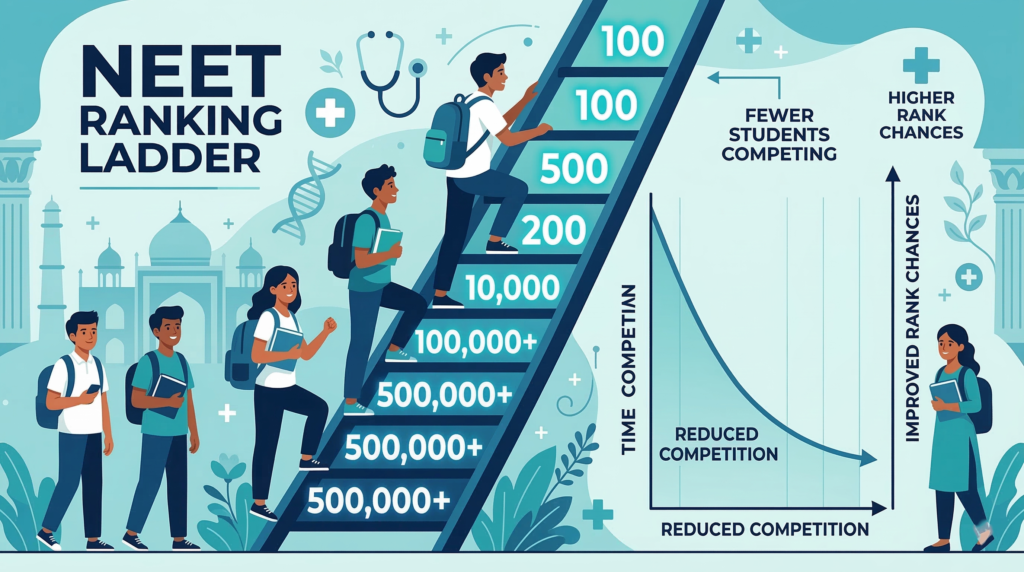
Here’s the big question every aspirant is asking.
1. Slightly Better Rank Opportunities
If fewer candidates appear, rank distribution may improve slightly.
Example:
- 24 lakh candidates → tougher rank competition
- 21.5 lakh candidates → slightly lower competition
However, this doesn’t automatically mean the exam becomes easy.
2. Cutoffs May Not Drop Significantly
Cutoffs depend mainly on:
- exam difficulty
- number of top scorers
- available seats
Even if registrations decrease, cutoffs may remain high if the paper is easier.
3. Quality of Competition Remains High
The students who still appear for NEET are usually serious aspirants with strong preparation.
So while numbers drop, the intensity of competition remains strong.
Strategy for NEET Aspirants in 2026
Instead of focusing on registration numbers, smart students focus on preparation strategy.
1. Master NCERT Completely
Nearly 80–85% of NEET questions come directly or indirectly from NCERT concepts.
2. Focus on High-Weightage Chapters
Prioritize chapters like:
- Human Physiology
- Genetics
- Thermodynamics
- Organic Reaction Mechanisms
These topics often dominate the paper.
3. Solve Mock Tests Regularly
Mock tests help you:
- improve speed
- identify weak areas
- simulate real exam pressure
4. Avoid Last-Minute Registration Mistakes
Many aspirants miss opportunities due to simple errors. If you ever face such a situation, read this guide on what to do if you miss the NEET registration deadline:
https://ksquareinstitute.in/blog/missed-neet-registration-deadline/
The Bigger Picture: Competition Is Still Massive
Even with 21.5 lakh candidates, NEET remains extremely competitive.
Consider this:
- MBBS seats in India: ~1.1 lakh
- Applicants: 21.5 lakh
That means less than 6% of candidates secure MBBS seats.
So the real battle is not about how many students apply—it’s about how well you prepare.
Final Thoughts
The news that NEET 2026 applications dropped slightly may seem encouraging, but it shouldn’t change your preparation mindset.
The truth is simple:
- NEET will always be competitive
- Cutoffs depend on performance, not just registrations
- Consistent preparation beats speculation
Instead of worrying about numbers, focus on concept clarity, mock practice, and disciplined study routines. That’s what ultimately decides your rank.
FAQs
Why did NEET 2026 applications dropped?
The drop may be due to factors like exam controversies, technical issues during registration, career diversification, and burnout among repeat candidates.
Does fewer applicants mean NEET will be easier?
Not necessarily. The difficulty level and performance of top students affect cutoffs more than the number of applicants.
Will NEET cutoff decrease in 2026?
Cutoffs depend mainly on exam difficulty and candidate performance, so they may not change significantly.
Is NEET still highly competitive?
Yes. Even with fewer registrations, millions of candidates compete for limited MBBS seats every year.