
Quick answer: A microbes in human welfare NEET PYQ analysis shows that NTA asks one to two questions a year from this chapter, and most of them are matching questions: microbe to product (citric acid, cyclosporin A, statins, streptokinase), microbes in household foods (curd, Swiss cheese, bread), sewage treatment and BOD, biogas, biocontrol agents and biofertilisers. The 2025 and 2026 papers asked Swiss cheese, fermented beverages and industrial products.
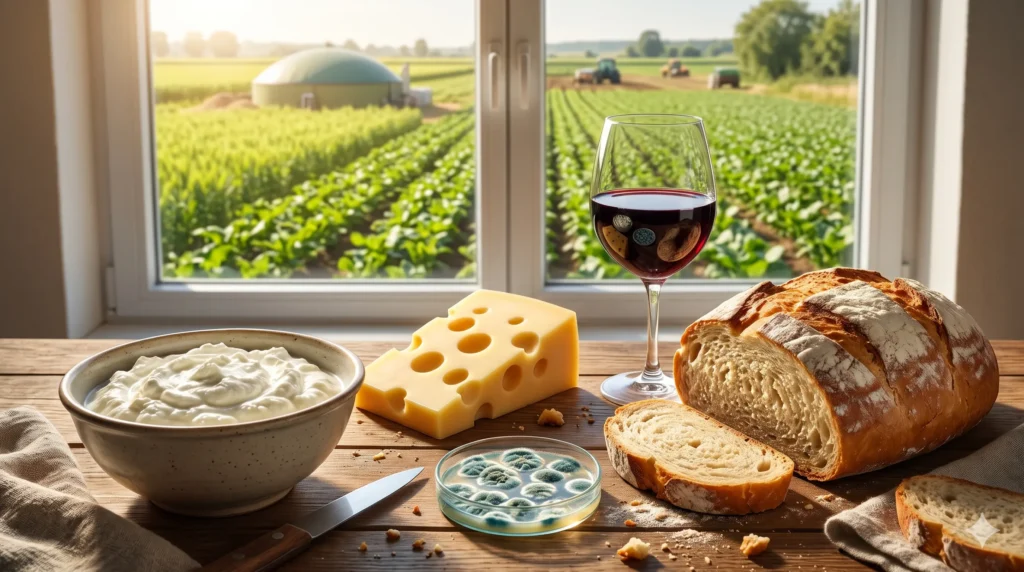
This guide breaks down what NTA repeats, the tables you must memorise and PYQ-pattern questions with answers. For chapter notes, use our Microbes in Human Welfare notes, and follow official news on our NEET 2027 latest updates page.
Want to test yourself first? Solve the Microbes in Human Welfare PYQs for free, then use this guide to fix the gaps.
Table of Contents
Why This Chapter Is Easy Marks
Microbes in Human Welfare has about 80 past questions, and roughly three in four are rated easy, because almost all are direct matches from NCERT tables. One evening with the product table and the sewage treatment steps can secure the chapter. For a quick warm-up, try these five quick microbes questions.
The organism names come from our Biological Classification PYQ analysis, and Bt toxins and streptokinase connect to our Biotechnology PYQ analysis. If you are also planning your exam calendar, our guide to the NEET 2027 registration date explains when the form is expected.
Microbes in Human Welfare NEET PYQ Analysis: What NTA Repeats
When you sort the past NEET biology PYQs from this chapter, five question types cover nearly everything.
| Question type | Frequency | What it tests |
|---|---|---|
| Industrial products | Most frequent | Organic acids, enzymes, bioactive molecules, beverages and their microbes |
| Household products | Very frequent | Curd, dough, cheese, toddy |
| Treating sewage | Regular | Primary and secondary treatment, flocs, BOD, activated sludge |
| Biocontrol agents and biofertilisers | Regular | Bt, Trichoderma, baculoviruses, Rhizobium, mycorrhiza, cyanobacteria |
| Biogas | Regular | Methanogens, biogas plant, composition |
Microbes in Household Products
| Product | Microbe and key fact |
|---|---|
| Curd | Lactobacillus and other lactic acid bacteria (LAB); acids coagulate and partly digest milk proteins; LAB increase vitamin B₁₂ and check harmful microbes in the stomach |
| Dosa and idli dough | Fermented by bacteria; the puffed-up look comes from CO₂ |
| Bread dough | Baker’s yeast, Saccharomyces cerevisiae |
| Toddy | Fermented sap of palms |
| Swiss cheese | Large holes from CO₂ made by the bacterium Propionibacterium sharmanii |
| Roquefort cheese | Ripened by growing specific fungi on it for flavour |
Swiss cheese was asked in 2026, so remember Propionibacterium sharmanii.
Microbes in Industrial Products
Fermented beverages: Saccharomyces cerevisiae (brewer’s yeast) ferments malted cereals and fruit juices. Wine and beer are made without distillation, while whisky, brandy and rum are made with distillation.
Antibiotics: Alexander Fleming discovered penicillin while working on Staphylococci, when a mould, Penicillium notatum, stopped their growth. Ernest Chain and Howard Florey established its full potential, and all three shared the Nobel Prize in 1945. Antibiotics treat plague, whooping cough, diphtheria and leprosy.
The Product Table to Memorise
| Product | Microbe | Type of microbe | Use |
|---|---|---|---|
| Citric acid | Aspergillus niger | Fungus | Organic acid |
| Acetic acid | Acetobacter aceti | Bacterium | Organic acid |
| Butyric acid | Clostridium butylicum | Bacterium | Organic acid |
| Lactic acid | Lactobacillus | Bacterium | Organic acid |
| Ethanol | Saccharomyces cerevisiae | Yeast | Industrial alcohol |
| Streptokinase | Streptococcus (modified by genetic engineering) | Bacterium | “Clot buster” for removing clots in patients with myocardial infarction |
| Cyclosporin A | Trichoderma polysporum | Fungus | Immunosuppressant for organ transplant patients |
| Statins | Monascus purpureus | Yeast | Lower blood cholesterol by competitively inhibiting the enzyme that makes cholesterol |
Enzymes: lipases are used in detergents to remove oily stains, and pectinases and proteases clear bottled fruit juices.
Questions from this table appeared in 2017, 2019, 2020, 2021, 2024, 2025 and 2026, nearly always as matching sets from this table.
Sewage Treatment
| Stage | What happens |
|---|---|
| Primary treatment | Physical removal of particles by filtration and sedimentation; the settled solids form primary sludge, and the liquid above is the effluent |
| Secondary (biological) treatment | Effluent goes into large aeration tanks, agitated and supplied with air; aerobic microbes grow into flocs (bacteria with fungal filaments in a mesh) that eat organic matter and lower the BOD |
| Settling tank | Flocs settle as activated sludge; a small part goes back to the aeration tank as inoculum |
| Anaerobic sludge digesters | The rest of the sludge is digested by anaerobic bacteria, producing biogas (methane, H₂S and CO₂) |
BOD (biochemical oxygen demand) is the amount of oxygen bacteria would use to oxidise all the organic matter in one litre of water. A higher BOD means more pollution. The Ministry of Environment and Forests started the Ganga Action Plan and Yamuna Action Plan to treat sewage before it reaches these rivers.
Biogas
- Biogas is mainly methane, with CO₂ and H₂.
- It is made by methanogens such as Methanobacterium, which grow anaerobically on cellulose. They are also found in anaerobic sludge and in the rumen of cattle, so cattle dung (gobar) is rich in them.
- A biogas plant has a 10–15 feet deep concrete tank for the dung slurry, with a floating cover that rises as gas collects.
- Biogas technology in India was developed mainly through the efforts of IARI and KVIC.
Biocontrol Agents
| Agent | Controls |
|---|---|
| Ladybird beetle | Aphids |
| Dragonflies | Mosquitoes |
| Bacillus thuringiensis (Bt) | Butterfly caterpillars: spores are sprayed on plants, and the toxin is released in the insect’s gut |
| Trichoderma | Free-living fungi that control several plant pathogens |
| Baculoviruses (genus Nucleopolyhedrovirus) | Insects and arthropods; species-specific and narrow-spectrum, with no harm to non-target organisms, so ideal for integrated pest management (IPM) |
Biofertilisers
| Group | Examples and role |
|---|---|
| Symbiotic bacteria | Rhizobium fixes nitrogen in the root nodules of legumes |
| Free-living bacteria | Azospirillum and Azotobacter fix nitrogen in the soil |
| Fungi (mycorrhiza) | Glomus absorbs phosphorus for the plant and gives resistance to root pathogens, salinity and drought |
| Cyanobacteria | Anabaena, Nostoc and Oscillatoria fix nitrogen, especially in paddy fields, and add organic matter to the soil |
Worked PYQ-Pattern Questions
Q1. The large holes in Swiss cheese are due to CO₂ produced by: (a) Lactobacillus (b) Propionibacterium sharmanii (c) Saccharomyces cerevisiae (d) Aspergillus niger
Answer: (b) Propionibacterium sharmanii.
Q2. Cyclosporin A, used as an immunosuppressant, is produced by:
Answer: The fungus Trichoderma polysporum.
Q3. Statins lower blood cholesterol. They are produced by: (a) Monascus purpureus (b) Streptococcus (c) Acetobacter aceti (d) Clostridium butylicum
Answer: (a) Monascus purpureus, a yeast.
Q4. Which beverages are produced without distillation?
Answer: Wine and beer. Whisky, brandy and rum need distillation.
Q5. A sample of water has a high BOD. This means it:
Answer: Has a large amount of organic matter and is more polluted.
Q6. Which fungus forms mycorrhiza and helps plants absorb phosphorus?
Answer: Glomus.
Common Traps in This Chapter
- Writing Aspergillus niger for acetic acid (it makes citric acid; Acetobacter aceti makes acetic acid)
- Saying Swiss cheese holes come from yeast
- Linking cyclosporin A with Monascus (that is statins)
- Saying whisky is made without distillation
- Calling flocs anaerobic (they are aerobic; anaerobic digestion happens later in sludge digesters)
- Saying a lower BOD means more pollution
Practise Every Microbes in Human Welfare PYQ
This microbes in human welfare NEET PYQ analysis shows you where the marks are. Solving real past questions makes the matches automatic. Every previous year question from this chapter is available chapter-wise, free:
👉 Solve all Microbes in Human Welfare NEET PYQs
Keep the product table and the sewage steps beside you for the first round, then solve the second round without them.
Conclusion
Microbes in Human Welfare is one of the easiest chapters to score in NEET Biology. Use this microbes in human welfare NEET PYQ analysis to master the household and industrial products, sewage treatment and BOD, biogas, biocontrol agents and biofertilisers. Then practise the past questions until each match comes without thinking.
❓ FAQ
Q: How many questions come from Microbes in Human Welfare in NEET? A: Usually one to two questions a year, mostly matching questions on microbes and their products.
Q: What is the most important topic in this chapter for NEET? A: Industrial products, especially the table of organic acids and bioactive molecules such as cyclosporin A, statins and streptokinase.
Q: What is BOD? A: Biochemical oxygen demand is the amount of oxygen bacteria would use to oxidise all the organic matter in one litre of water. A higher BOD means more polluted water.
Q: Which microbes are used as biocontrol agents? A: Bacillus thuringiensis, the fungus Trichoderma and baculoviruses of the genus Nucleopolyhedrovirus, along with predators such as ladybirds and dragonflies.
Q: What gas is mainly present in biogas? A: Methane, produced by methanogens such as Methanobacterium.
Q: Where can I practise Microbes in Human Welfare NEET PYQs for free? A: You can solve every previous year question from this chapter chapter-wise for free using the practice links in this article.
Related posts:
 Human Reproduction NEET PYQ Analysis: Gametogenesis, Menstrual Cycle and Pregnancy
 Evolution NEET PYQ Analysis: Human Evolution, Hardy-Weinberg and Evidences
 Reproductive Health NEET PYQ Analysis: Contraception, STIs and ART
 Human Health and Disease NEET PYQ Analysis: Diseases, Immunity, Cancer and Drugs