
If you feel sudden anxiety, confusion, or mental blankness the moment you enter the Physics section, you’re not alone. Many aspirants experience this exact feeling of panic in NEET Physics, even after preparing seriously. What makes it worse is that you may actually know the answers, but still fail to perform under pressure.
This isn’t a knowledge problem. It’s a response problem—how your brain reacts under exam stress.
Early in your preparation, building control over your approach matters more than just studying harder. Following a calm and controlled NEET Physics exam strategy for high accuracy and learning through disciplined guidance from a trusted experienced physics teacher for NEET can significantly reduce this panic by training your mind to stay stable under pressure.
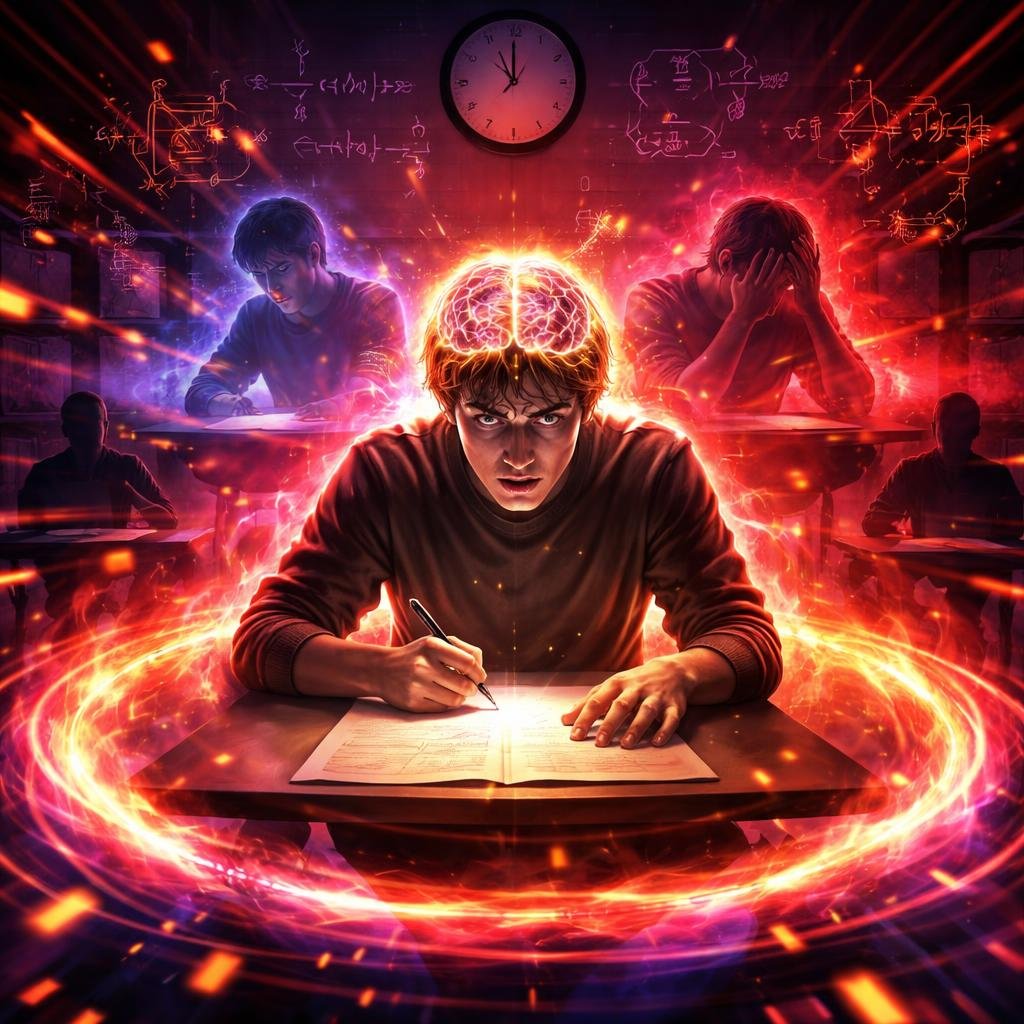
Panic Starts Before the Exam, Not Inside It
Most students think panic in NEET Physics begins when they see tough questions. In reality, it starts much earlier.
It builds up through:
- Fear of Physics being difficult
- Past bad experiences in mock tests
- Low confidence in problem-solving
By the time you reach the exam hall, your brain is already expecting stress. So even a normal question can feel overwhelming.
This is why two students can see the same paper—one stays calm, the other panics.
Your Brain Is Going Into Survival Mode
When panic hits, your brain shifts from logical thinking to survival mode. This is a natural biological response.
In this state:
- Your heart rate increases
- Your focus narrows
- Your memory recall weakens
This is why you suddenly feel like you don’t remember anything. It’s not that you don’t know—it’s that your brain cannot access what you know.
Students experiencing panic in NEET Physics often describe this as a “mental block,” and that’s exactly what it is.
Lack of Familiarity With Exam Pressure
One of the biggest reasons behind panic in NEET Physics is not practicing under real exam conditions.
If your preparation mostly happens in a relaxed environment, your brain is not trained to perform under pressure. So when the actual exam situation appears—time limit, silence, expectations—it feels overwhelming.
The brain reacts to unfamiliar situations with stress. The more familiar the environment, the calmer you remain.
Overthinking Every Question
Another major trigger is overthinking.
When you panic, you start doubting simple steps. You read the same question multiple times, second-guess your approach, and waste time trying to be “extra sure.”
This creates a loop:
You feel pressure → you overthink → you slow down → pressure increases → panic gets worse.
This loop is one of the strongest causes of panic in NEET Physics during exams.
Fear of Making Mistakes
Students who are very conscious about accuracy often experience more panic.
You might be thinking:
“What if I make a silly mistake?”
“What if I lose marks here?”
This fear creates hesitation. And hesitation breaks your flow.
Instead of solving naturally, you start forcing perfection. That’s when your confidence drops, and panic in NEET Physics takes over.
Poor Start in the Physics Section
Your first few questions matter more than you think.
If you:
- Get stuck on the first question
- Spend too much time early
- Make an initial mistake
your confidence drops immediately.
This creates a negative momentum that increases panic in NEET Physics for the rest of the section.
Mental Fatigue During the Exam
By the time you reach Physics (or even midway through it), your brain may already be tired.
Fatigue reduces:
- Focus
- Decision-making speed
- Accuracy
In this state, even manageable questions feel difficult, which increases the feeling of panic in NEET Physics.
You’re Focusing on the Result, Not the Process
One subtle but powerful reason for panic is thinking too much about the outcome.
If your mind is constantly thinking:
“I need to score this much”
“I can’t afford mistakes”
you are not fully present in the question.
This disconnect creates stress and leads to panic in NEET Physics, because your brain is split between solving and worrying.
The Real Way to Control Panic
You don’t eliminate panic by trying to “stay calm.” You reduce it by building familiarity, control, and trust in your process.
Start by practicing under timed conditions regularly. Train your brain to handle pressure gradually. Focus on solving one question at a time instead of thinking about the entire section.
When panic starts, slow your breathing slightly and reset your focus. Even a few seconds of controlled pause can bring your brain back to logical mode.
Why This Panic Is Actually a Good Sign
It might not feel like it, but panic in NEET Physics often happens when you care deeply about your performance.
It shows that you are invested. The goal is not to remove that intensity—it’s to control it.
Once you learn how to manage this response, your performance improves quickly because your preparation is already there.
You Don’t Need More Knowledge—You Need More Control
Most students think they need to study more to overcome panic.
But in reality, they need better control over:
- Their thoughts
- Their pace
- Their reactions
Once you develop this control, the same questions that once triggered panic in NEET Physics start feeling manageable.
FAQs
Why do I panic specifically in Physics during NEET?
Because Physics requires problem-solving under time pressure, which can trigger stress if you are not used to it.
How can I stay calm during the Physics section?
Practice timed tests regularly, focus on one question at a time, and avoid thinking about the final result during the exam.
Is panic normal during NEET exams?
Yes, it is very common. Even well-prepared students experience it, but they learn how to manage it.
Can panic affect my performance even if I know the answers?
Yes, panic can block memory recall and reduce focus, leading to mistakes.
How can I reduce panic before the exam?
Build confidence through consistent practice, simulate exam conditions, and focus on your preparation instead of outcomes.